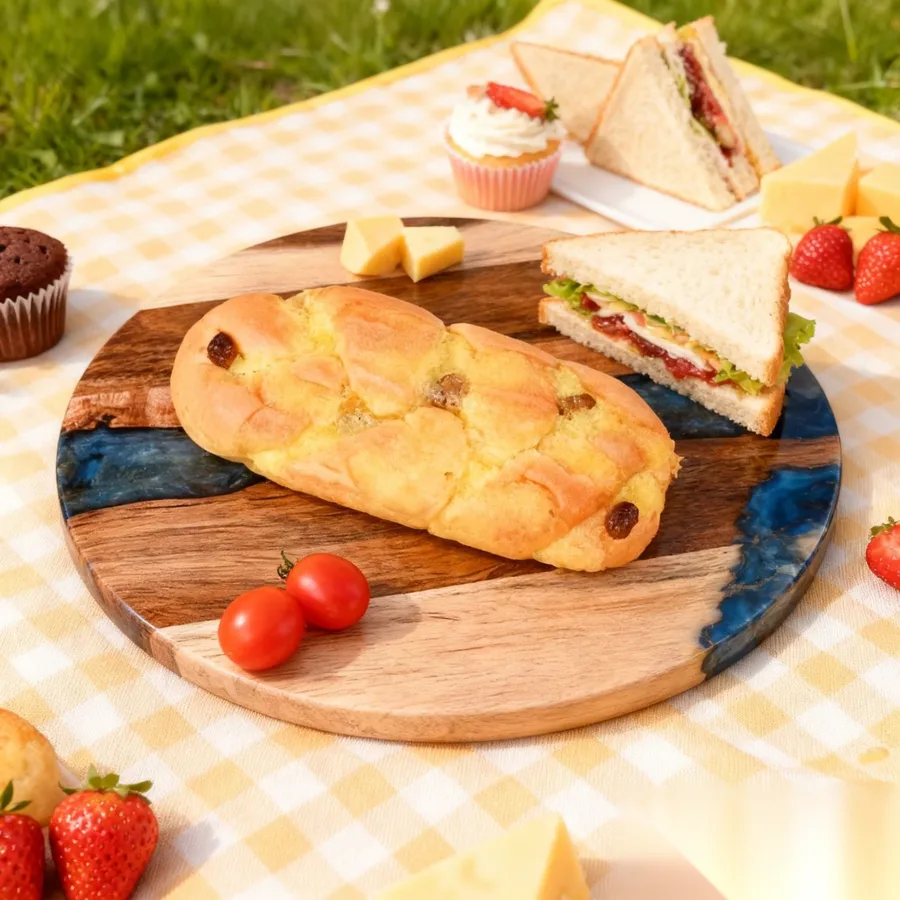
Beautiful as they are, epoxy resin and wood boards raise fair questions. Across Amazon reviews, Reddit threads, woodworking blogs, and our own inbox, the same worries come up again and again: Is the resin safe to eat off? Will cutting it shed plastic? Will it crack? Is it worth the money? Below, PEIMI answers the eight concerns we hear most—plainly, with the trade-offs stated, not hidden.
Buying for a shop, a hotel, or a gift line? Message PEIMI on WhatsApp—we'll walk you through material choices, MOQs, and samples.
Talk to PEIMI →Why Shoppers Hesitate
Resin boards sit at the intersection of two materials with different rules. Wood is alive—it moves, absorbs, and self-heals a little. Resin is inert and stable once cured. Most worries come from not knowing which rule applies where. The good news: a well-made board makes the split obvious. At PEIMI we design every board with a wood side for cutting and a resin side for serving and display, so the job each material does best is also the job it's used for.
Is the Epoxy Really Food Safe?
This is the #1 question, and rightly so. The honest answer: only fully cured, food-grade epoxy is food safe—and not all "food safe" labels mean the same thing.
- Food-grade, not industrial. Industrial epoxy (electronics, flooring) can contain unreacted compounds. A board for food must use resin formulated for food contact and compliant with food-contact standards (e.g. FDA 21 CFR 175.300 / equivalent regional standards).
- Cure matters more than the label. A surface can look hard but still be under-cured underneath. Under-cured resin can leach. Reputable makers respect full cure times—often far longer than the "feels hard" point.
- Acid and heat. Like any plastic, avoid leaving acidic foods (lemon, tomato) or hot pans on the resin for long. At normal room temperature and food-prep use, fully cured food-grade resin is stable and inert.
PEIMI's approach: we use food-grade resin and a dry, food-safe finish, fully cured before it ships. If a board smells chemical or feels tacky out of the box, that's a red flag—don't use it.
Knife Marks, Microplastics & Bacteria
Cutting on any plastic surface—including cured epoxy or a standard polyethylene board—can release tiny particles. That's a real, studied concern. Two things reduce your exposure dramatically:
- Cut on the wood side. Wood is naturally less prone to deep grooves and, in studies, has shown antibacterial behavior as it dries. Keep the resin side for presenting food, not for repeated chopping.
- Resin is harder than typical board plastic, so it generally sheds fewer particles per cut than a soft plastic board—but the simple rule stands: the wood face is for the knife.
Bacteria hide in deep scratches. Because PEIMI boards keep cutting to the wood face (which you oil and maintain) and reserve resin for serving, the scratched, food-contact surface is the one you can actually refresh and care for.
Will It Dull My Knives?
Yes—if you chop on the resin. Hard resin is tougher on an edge than wood, and users describe the feel as "glassy" or "skatey." The fix is the same as above: use the wood side for cutting. Hardwoods like acacia and walnut are knife-friendly and gentle on edges. Treat the resin face as a serving canvas, and your knives stay sharp far longer.
Why No Dishwasher—and Easy Care
The single most common cause of a ruined resin board is the dishwasher. Heat plus prolonged water opens the wood grain, warps it, and clouds or cracks the resin. Care is genuinely simple, though:
- Rinse with warm (not hot) water right after use.
- Wash with a soft sponge and mild soap. Skip abrasive scrubbers.
- Dry immediately and store upright—never flat and wet.
- Oil the wood face every few weeks with food-safe mineral oil; the resin needs no oil.
- A half lemon + pinch of salt wipes away light stains and odors.
That's it. No special products, no long routine. Our full care guide covers stain and odor removal in detail.
Will It Crack or Delaminate?
The negative reviews that hurt this category—"broke after one use," "flimsy," "split where the resin meets the wood"—almost always come from thin, cheaply bonded boards. Three things prevent it:
- Thickness and density. A solid hardwood core (acacia, walnut) feels substantial and resists flex. Thin, light boards feel cheap because they are.
- Bond quality. The resin-to-wood seam is the stress point. Proper surface prep and cure keep it bonded through years of washing and use.
- Right use. Don't soak, don't dishwasher, don't leave in the sun for days (UV can fade resin and heat can warp the seam).
PEIMI boards are built as small-batch, thick hardwood pieces—made to be used and displayed, not to be the cheapest thing on the listing.
What About Smell?
A new board should have a light, natural wood scent—never a chemical or solvent smell. If it smells like plastic or paint, the resin likely isn't fully cured; set it aside. Two other smell traps:
- Wrong oil. Using olive or vegetable oil makes a board turn rancid and smell. Only use food-safe mineral oil or a beeswax board cream.
- Strong foods. Garlic and onion can linger in wood. A lemon-and-salt wipe neutralizes it. If a board still smells after that, it wasn't dried properly.
Is It Worth the Price?
A resin and wood board costs more than a plain plastic or bamboo board—and some buyers feel the lightweight ones "aren't worth it." The value isn't in being light; it's in being functional art: a serving piece that also works as a cutting board, a gift that photographs well, and a product with a story (hand-poured resin, real hardwood). If you only need a disposable prep surface, a simple wood board is the better buy. If you want a centerpiece you'll actually use and show off, a quality resin board earns its place.
3 Ways to Spot a Good Resin Board
- No chemical smell, no tackiness. Out of the box it should feel fully dry and smell like wood.
- Clear resin vs. wood roles. Good makers tell you which side to cut on and which to serve on. Vague "cut anything" claims are a warning sign.
- Substance. Reasonable thickness, a hardwood name you can verify (acacia, walnut), and a maker who'll state their resin grade and cure process.
When in doubt, ask the seller directly. A confident maker answers; a vague one tells you what you need to know.
Still deciding? We'll help you choose.
Tell us how you'll use the board—home, gifting, or wholesale—and we'll recommend the right size, wood, and resin style.
Get a Recommendation →FAQ
Is epoxy resin on a cutting board food safe?
Only when it's fully cured, food-grade resin made for food contact and compliant with food-contact standards. PEIMI uses food-grade resin with a dry, food-safe finish, fully cured before shipping. Avoid any board that smells chemical or feels tacky.
Can I cut directly on the resin part?
You can, but we recommend cutting on the wood side to protect your knives and keep the resin surface scratch-free for serving. Use the resin face for presenting food.
Do resin boards shed microplastics when cut?
Any plastic surface can shed tiny particles when cut. Cutting on the wood face instead of the resin greatly reduces this, and wood is naturally easier to keep clean and refreshed.
Why can't resin boards go in the dishwasher?
Dishwasher heat and prolonged water warp the wood and can cloud or crack the resin. Hand wash with warm water and mild soap, dry immediately, and store upright.
Will a resin wood board crack or split?
Cheap, thin, poorly bonded boards can. A thick hardwood core with a properly cured resin seam—like PEIMI's—holds up for years with basic care. Avoid soaking, dishwashers, and long sun exposure.
My board smells like plastic. Is that normal?
No. A new board should smell like wood, never chemicals. A plastic or solvent smell suggests incomplete curing—don't use it. Rancid food smells usually come from using cooking oils; use only mineral oil or beeswax cream.
Which wood is best for a resin board?
Dense hardwoods like acacia (相思木) and walnut (胡桃木) are durable, knife-friendly, and pair well with poured resin. They resist deep cuts better than soft woods.
Are resin boards worth the price?
If you want a functional, giftable, display-worthy board, yes. If you only need a disposable prep surface, a plain wood board is the better value. Quality resin boards are built as small-batch hardwood pieces, not the cheapest listing.