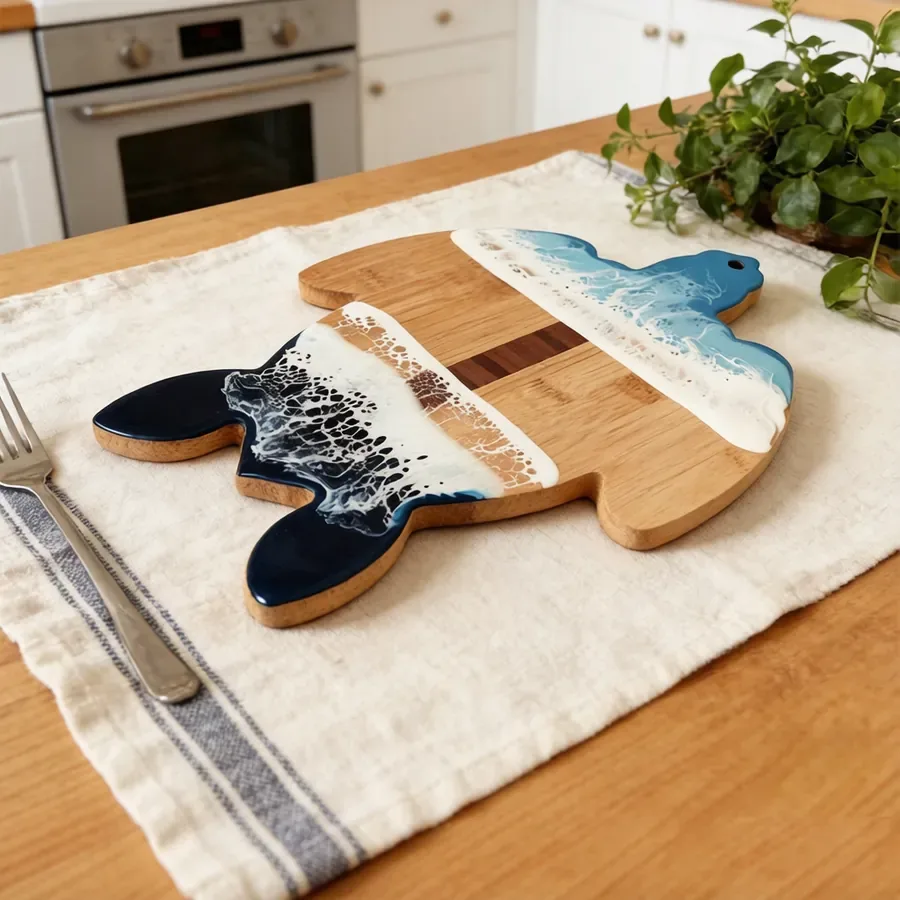
A handcrafted epoxy resin and wood cutting board is part kitchen tool, part décor. With the right routine it stays beautiful and food-safe for years. This care guide covers daily cleaning, oiling, what to avoid, and how to fix common problems—so your PEIMI board looks as good as the day it arrived.
Need a replacement or a second board? Message PEIMI on WhatsApp for care advice or to reorder your favorite design.
Ask PEIMI →Why Proper Care Matters
Epoxy resin and hardwood are different materials bonded together. Wood is porous and moves with humidity; resin is stable and non-porous. A balanced routine keeps the wood from drying and cracking while protecting the resin finish. Good care also preserves the board's appearance—the reason you bought it in the first place.
Everyday Cleaning (Do This Daily)
- Rinse with warm (not hot) water immediately after use.
- Wash with a soft sponge and a mild dish soap. Avoid abrasive scrubbers that can dull the resin.
- Wipe, then dry standing upright on a rack—never lay it flat while wet.
- Air dry completely before storing.
Pro tip: A quick wipe with a half lemon and a pinch of salt removes light stains and deodorizes naturally.
Oiling & Conditioning Schedule
The wood portion benefits from periodic conditioning. Use a food-safe mineral oil or a board cream (beeswax + oil). Avoid cooking oils (olive, vegetable) which can go rancid.
| Use | Frequency |
|---|---|
| Light mineral-oil wipe | Every 3–4 weeks of regular use |
| Deep conditioning (oil + wax) | Every 2–3 months |
| After heavy washing or soaking | Re-oil once dry |
Apply oil with a soft cloth, let it absorb 15–20 minutes, then buff off the excess. The resin area does not need oil—focus on the exposed wood.
What to Avoid
- Dishwasher: Heat and prolonged water warp wood and cloud resin. Never dishwasher a resin board.
- Long soaking: Don't leave it in the sink. Standing water raises the wood grain and can loosen the bond over time.
- Harsh chemicals: Bleach and strong degreasers damage both wood and resin.
- Direct sun for days: Prolonged UV can fade resin colors. Store in a shaded spot.
Removing Stains & Odors
For stubborn marks, make a paste of baking soda and water, rub gently, rinse, and dry. For garlic or onion smells, the lemon-and-salt wipe works well. Always re-oil after any deep cleaning.
Heat, Knives & Cutting on Resin
Resin is durable but not indestructible. Use the wood side for cutting; keep hot pans off the surface. Light knife marks on resin can be smoothed with a very fine (600+ grit) wet sanding and a polish, but deep cuts are best left to a pro or replaced.
Storage & Long-Term Care
Store upright in a dry, ventilated area. If stacking boards, place a soft cloth between them. For seasonal pieces you won't use for months, give them a conditioning coat before storing. Wholesale buyers should brief their customers with this same routine to reduce returns.
Loved your board and want another?
Explore the full collection or message us for a care kit and reorder.
Reorder or Ask →FAQ
Can epoxy resin cutting boards go in the dishwasher?
No. The heat and prolonged water exposure will warp the wood and can cloud or crack the resin. Always hand wash and air dry.
How often should I oil my resin and wood board?
Wipe with food-safe mineral oil every 3–4 weeks of regular use, and do a deep conditioning every 2–3 months. Re-oil after any heavy wash.
Is the resin part food safe?
Yes, when made with fully cured, food-grade epoxy. PEIMI uses food-safe resin and a dry, food-safe finish. Avoid boards with chemical odors or sticky surfaces.
Can I cut directly on the resin section?
You can, but use the wood side for heavy chopping to keep knives sharp and protect the resin surface from deep cuts.
How do I remove stains or smells?
A baking-soda paste gently rubbed and rinsed handles stains; a lemon-and-salt wipe removes odors. Always dry fully and re-oil afterward.
Why is my board warping?
Usually from soaking or dishwasher use. Keep it dry, store upright, and a light re-oil can help minor cupping. Severe warping may need replacement.
Can I use olive or coconut oil to condition it?
No. Culinary oils can turn rancid and smell. Use only food-safe mineral oil or a beeswax board cream.
How long does a resin wood board last?
With proper care, many years. The resin is highly durable; longevity depends mostly on how well the wood is kept dry and conditioned.